
Latest News


Send Us A Message
How to compare plant growth regulators for lodging control
How to Compare Plant Growth Regulators for Lodging Control
Selecting Plant Growth Regulators for lodging control requires more than comparing active ingredients or unit prices. Technical evaluators must assess crop response, application timing, dose flexibility, formulation stability, residue requirements, and documentation readiness for target markets. A structured comparison helps identify solutions that deliver reliable stem-strengthening performance while supporting compliant sourcing, safe transport, and efficient international procurement.
Lodging is rarely caused by one factor. Excessive nitrogen availability, dense stands, vigorous varieties, shallow rooting, irrigation practices, disease pressure, wind, and rainfall can all contribute. A plant growth regulator may reduce risk by limiting excessive stem elongation, altering internode development, or helping the crop maintain a more compact canopy. It cannot compensate for poor agronomy, unsuitable varietal choice, or a treatment applied outside its effective growth window.
For that reason, the right comparison begins with the crop system and the intended use pattern—not with a supplier’s catalogue order.
Define What “Lodging Control” Means in the Specific Crop
The technical objective differs across cereals, cotton, rice, oilseed crops, turf, and horticultural production. In wheat or barley, evaluators may be concerned primarily with reducing stem height and managing weak lower internodes before the period of highest lodging exposure. In cotton, the objective can be controlling excessive vegetative growth so that the crop directs more resources toward reproductive development and remains manageable. In rice, local production systems, varieties, water management, and regulatory approvals can substantially affect which options are relevant.
A useful internal brief should identify the crop, variety type, growth stage convention used locally, expected application equipment, climate conditions, and the main lodging mechanism. Stem lodging and root lodging are related but not identical problems. A regulator that shortens plants may improve canopy balance without solving poor anchorage caused by compacted soil, weak roots, or severe disease pressure.
This distinction prevents an often costly mistake: judging products only by visible plant height reduction. Shorter plants are not automatically better plants. Over-regulation can delay development, reduce crop tolerance to stress, or create an undesirable balance between vegetative and reproductive growth. The performance target should be crop architecture and harvestability, rather than maximum growth suppression.
Compare Mode of Action, but Do Not Treat It as the Whole Decision
Plant Growth Regulators used for lodging management work through different physiological pathways. Some commonly used active ingredients affect gibberellin-related growth processes, while others influence ethylene responses or broader vegetative growth patterns. This difference matters because it shapes timing sensitivity, expected crop response, interaction with weather, and the consequences of an application that is too early, too late, or too aggressive.
For example, chlormequat chloride, trinexapac-ethyl, prohexadione-calcium, paclobutrazol, mepiquat-based products, and ethephon-containing treatments are not interchangeable simply because each may be discussed in relation to growth management. Their legal uses vary by country and crop. Their formulation characteristics, application windows, and compatibility considerations also differ. A technical comparison should rely on the label and supporting technical dossier applicable to the destination market, rather than assumptions based on experience in another region.
Dose Flexibility Is Often More Valuable Than the Lowest Cost per Kilogram
Technical teams should calculate the cost at the intended field-use rate, but that is only a starting point. A lower-priced material can become less economical if its practical dose range is narrow, its response varies sharply with temperature or crop vigour, or it creates operational constraints during a short application window.
Dose flexibility matters particularly in seasons with uneven stand development. Fields may contain areas of moderate and high vigour, or weather may postpone treatment until the crop approaches a less forgiving growth stage. Where the local registration permits it, an option with clear guidance for rate adjustment or split application may be easier to integrate into a professional crop-management program. That flexibility must be supported by applicable label instructions; it should never be inferred from a product’s chemistry alone.
Also compare the delivered active ingredient, not just litres or kilograms of formulated product. Two formulations with the same active ingredient name may have different concentrations, co-formulants, packaging formats, and handling requirements. Converting offers to cost per unit of active ingredient and then to estimated cost per treated hectare creates a more meaningful comparison. It also exposes cases where a seemingly low headline price reflects a lower concentration or a formulation that is less convenient for the intended spraying system.
Formulation Quality Affects What Happens in the Spray Tank
For a lodging-control program, consistency starts before the sprayer enters the field. Water-soluble concentrates, suspension concentrates, emulsifiable concentrates, soluble powders, water-dispersible granules, and other formulation types behave differently during storage and dilution. The choice should reflect the active ingredient, local handling practice, water quality, spray equipment, and the need for tank mixing.
A technical review should request product specifications and examine appearance, active content, density where relevant, pH, pourability or dispersibility, and storage recommendations. For suspensions and dispersions, sedimentation and redispersibility deserve attention. For liquid products, assess leakage risk, pack robustness, and performance after storage under plausible transport conditions. These are practical concerns rather than laboratory formalities: a product that is difficult to homogenize or measure consistently can undermine field-rate accuracy.
Tank-mix decisions require the same discipline. Compatibility with fungicides, herbicides, foliar nutrition products, adjuvants, or other crop inputs should be checked against local labels and, where appropriate, evaluated through a jar test before larger-scale use. Physical compatibility does not prove biological safety. A clear mixture in a container can still produce crop stress under hot, cold, drought-affected, or otherwise adverse field conditions.
Weather Sensitivity and Crop Condition Should Be Part of the Product Score
Plant regulators are biological tools applied in real weather, not fixed-output chemicals. Their response can depend on temperature, light, moisture status, nutrient availability, and the rate at which the crop is developing. The same nominal application window may represent very different physiological conditions in a cool, slow-growing season and a warm, rapidly advancing one.
Evaluators should ask how the proposed product is positioned under stress conditions. Does the local label include restrictions related to drought, frost, waterlogging, high temperatures, or crop damage? Is there practical guidance for treating uneven fields? What happens if rain disrupts the planned spray day? The answer will differ by active ingredient, formulation, crop, and country registration. A supplier should be able to distinguish between documented instructions and general agronomic opinion.
This is also where trial design becomes valuable. Before a broad commercial rollout, local plots can compare untreated areas with candidate programs under the intended agronomy. Record crop stage at treatment, weather before and after application, nitrogen regime, plant height, lodging incidence, harvestability, and any visible crop response. A single season may not settle every question, but it is more useful than relying only on generic claims from another geography.
Regulatory Status and Residue Planning Cannot Be an Afterthought
A product’s suitability depends on legal registration in the country of use and, for export-oriented crops, the requirements of destination markets. Registration, permitted crops, maximum application rates, pre-harvest intervals, and residue limits are jurisdiction-specific. They can change, and technical evaluators should confirm the current position with the relevant authority, registration holder, or qualified local adviser.
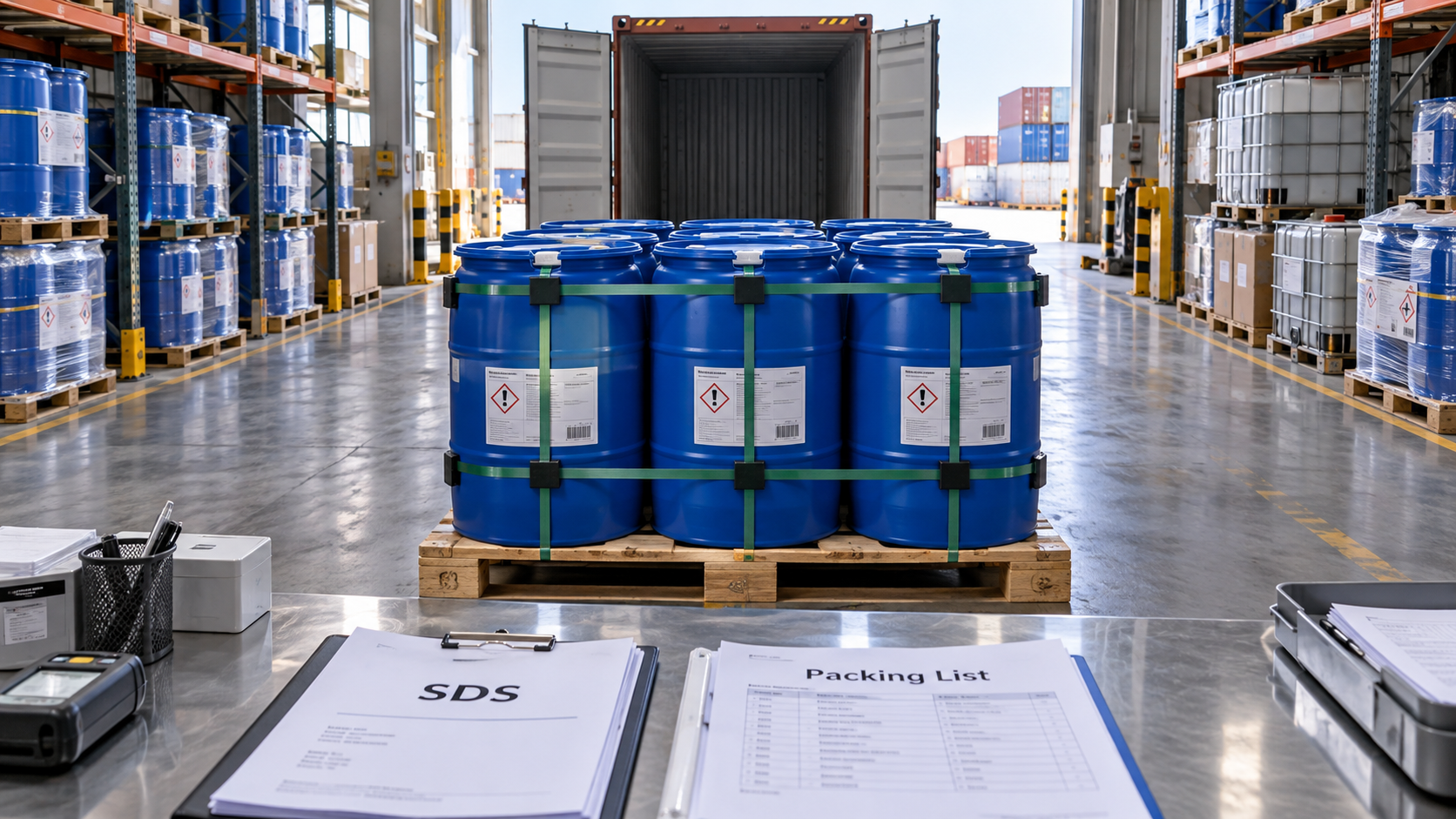
The chemical identity on a commercial offer is not enough. Request the safety data sheet, certificate of analysis for the batch or agreed specification, technical data sheet, and any documents required for import registration or local distribution. If the material is an active ingredient rather than a finished formulation, clarify who bears responsibility for formulation, registration support, labeling, and downstream stewardship. Those responsibilities are often blurred during early sourcing discussions and become urgent only when a shipment is ready to move.
It is prudent to review package label language, hazard communication, transport classification, and customs documentation before issuing a purchase order. A product may be technically preferred but operationally unsuitable if the importer cannot receive it under the planned packaging, classification, or documentation set.
Evaluate the Supplier as Part of the Technical Solution
For internationally sourced Plant Growth Regulators, product selection and supplier selection are closely connected. Technical quality must be repeatable from batch to batch, but buyers also need traceability, responsive document control, clear packing information, and realistic logistics coordination. These requirements become especially important where hazardous-material procedures, port handling, container availability, or destination customs requirements affect delivery timing.
An effective supplier review goes beyond asking whether a product can be supplied. It should test whether the supplier can explain the applicable specification, provide requested documents in a usable format, identify packaging options, coordinate samples without confusing them with commercial shipment requirements, and communicate changes before they become a problem. For buyers using letters of credit, document wording and timing may require the same level of scrutiny as the chemical specification.
Jingrui Yake operates in this part of the process as an international chemical trade partner, connecting overseas buyers with supply resources from China’s chemical-producing regions while coordinating export procedures through established port logistics networks. For PGR-related sourcing, the practical value is not simply access to different origins or batch sizes. It is the ability to align technical documentation, quotation terms, shipment planning, customs materials, and payment documentation within one coordinated export workflow.
This matters when a procurement team is comparing more than one possible active ingredient, formulation, or source. Consolidated sourcing can simplify communication, but the supplier must still keep each product’s regulatory, transport, and quality requirements distinct. Combining orders should not mean combining documentation carelessly.
Build a Decision File Before Committing to Volume
A robust comparison file brings agronomy, quality, compliance, and delivery into one decision. For each candidate, record the approved use pattern, active ingredient and formulation, intended application rate, crop-stage window, known use restrictions, quality specification, packaging, storage requirements, transport status, required documents, and estimated lead time. Add a separate field for unresolved questions. This prevents commercial momentum from disguising technical uncertainty.
The final decision should not be “which regulator is strongest?” It should be: which legally available and technically documented option fits this crop, this timing, this risk profile, this formulation system, and this supply route? When those questions are answered clearly, price becomes easier to interpret. When they are not, a low-cost offer may simply transfer risk from the purchase order to the field, the warehouse, or the border.
Send Us Your Inquiry Today