
Latest News
Send Us A Message
Choosing hydroxypropyl methylcellulose viscosity for tile adhesives
Choose Hydroxypropyl Methylcellulose (HPMC) viscosity by how the tile adhesive performs at a controlled water content, rather than by the highest number on a supplier’s specification sheet. A suitable grade must retain enough water for cement hydration, spread cleanly under a notched trowel, support the tile, and maintain useful open time without making the mortar excessively sticky.
There is no universal viscosity grade for every tile adhesive. The right choice depends on the cement, aggregate grading, other additives, tile format, substrate, and application conditions. A reliable selection process starts with comparable viscosity data, then evaluates a small number of candidates in the intended formulation.
Make viscosity figures comparable before choosing a grade
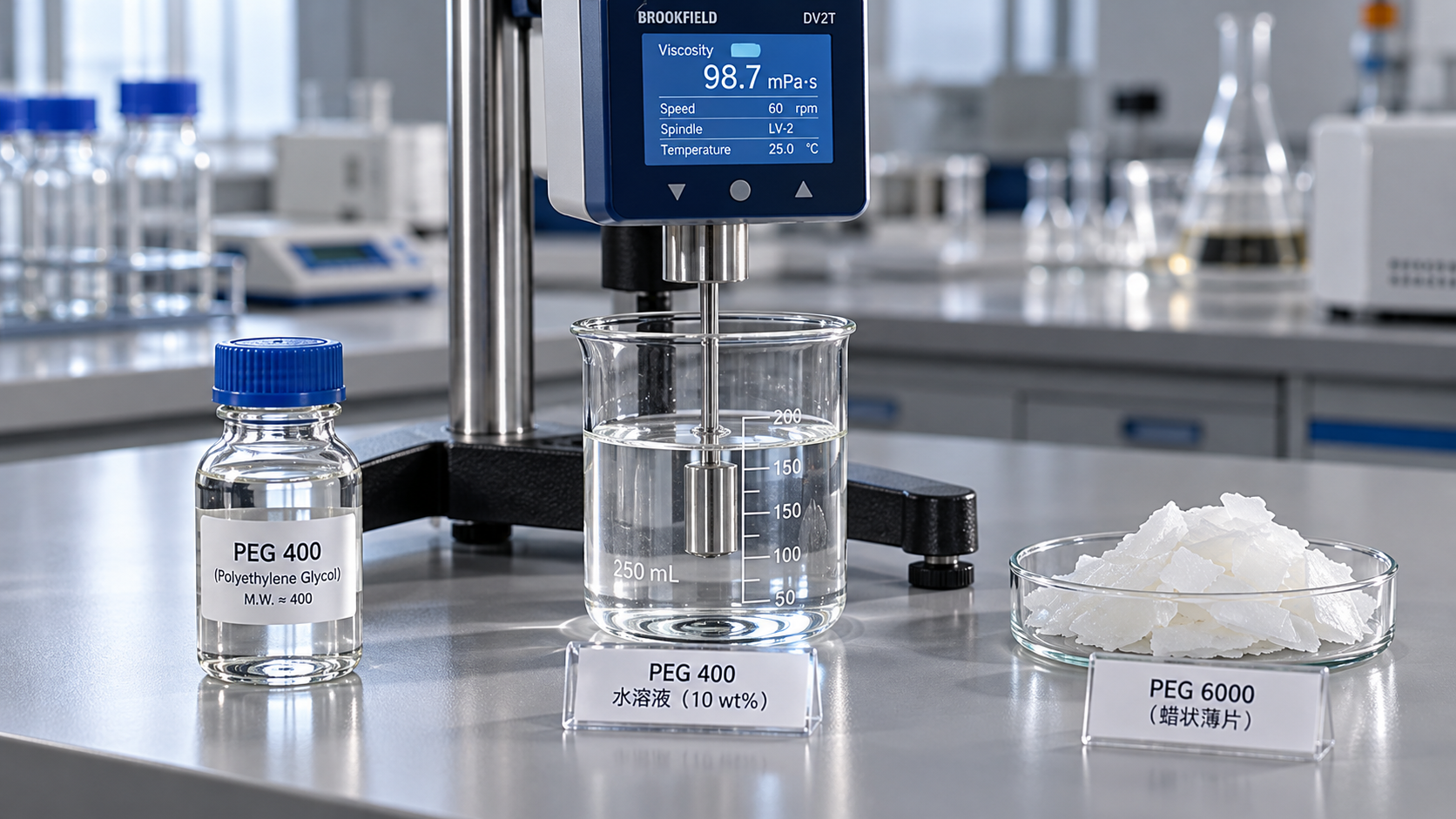
The viscosity listed for HPMC generally describes an aqueous solution measured under specified conditions. It does not directly describe the consistency of a cement-based adhesive. Two products with similar published values can produce different mortar behavior, while apparently different values may reflect different measurement methods.
Before comparing supplier data, establish the following:
- Solution concentration: The concentration and preparation basis must match. Changing concentration can substantially change the measured viscosity.
- Measurement temperature: Compare values obtained at the same temperature, since solution viscosity is temperature dependent.
- Instrument and settings: The instrument type, spindle or geometry, and rotational speed or shear conditions affect the result.
- Solution preparation: Dissolution procedure, hydration time, and conditioning should be defined.
- Specification range: A nominal grade name is less informative than the actual acceptance range and test method.
The units mPa·s and cP are numerically equivalent, but matching units alone does not make results comparable. A value measured under one procedure should not be converted into another supplier’s grade designation using an assumed ratio.
Descriptions such as “medium viscosity” and “high viscosity” are also supplier dependent. Use them to organize candidates within a documented product range, rather than as universal categories across manufacturers.
What higher HPMC viscosity can—and cannot—solve
Within a comparable product family and at a fixed dosage, increasing solution viscosity often increases mortar consistency and cohesion. This can help adhesive ridges hold their shape and improve handling on vertical surfaces. The useful limit is reached when additional body begins to interfere with spreading, tile embedding, or wetting.
A mortar can feel strong under the trowel yet resist compression beneath the tile. If the ridges do not collapse sufficiently during installation, contact may be incomplete. This is particularly relevant with larger tiles, where supporting the tile and achieving adequate adhesive coverage must be assessed together.
Water retention does not increase in a simple, unlimited relationship with viscosity. It also depends on HPMC dosage, substitution characteristics, dissolution behavior, and the surrounding formulation. Once water retention is adequate, selecting a still higher viscosity may add stickiness without delivering a useful improvement in open time or bond performance.
Open time is especially easy to misjudge. An adhesive may remain soft in the mixing container while its exposed surface develops a skin. Useful open time depends on whether a tile placed after a delay still wets properly and develops the required bond. It cannot be established by touching the mortar or observing that it remains workable.
Match the candidate to the application
Wall adhesives need support and easy embedding
For vertical applications, assess resistance to tile movement alongside troweling effort and adhesive transfer. A higher-viscosity grade can be a useful candidate when the mortar lacks body, but aqueous solution viscosity does not directly measure the mortar’s resistance to slipping.
Slip resistance depends strongly on the structure of the complete mortar, including its yield stress and recovery after troweling. Starch ethers or other rheology modifiers may influence these properties. Increasing HPMC viscosity alone can therefore be an inefficient response when the formulation needs a more targeted adjustment.
Floor and large-format applications need coverage
For floor installation, prioritize spreading, ridge collapse, and contact beneath the tile while maintaining sufficient body. A grade that makes the adhesive feel impressively thick may increase installation effort or reduce wetting at the chosen water content.
Large-format tiles intensify this trade-off. A candidate should be assessed using the intended tile, trowel, application thickness, and embedding method. Easy movement during adjustment is useful only if the adhesive also supports the installation and achieves the required coverage.
Hot, dry, or absorbent conditions need separate evaluation
High temperatures, moving air, and absorbent substrates can remove water from an exposed adhesive bed quickly. Under these conditions, water retention and surface behavior deserve particular attention. A higher viscosity number alone does not establish suitability.
HPMC chemistry influences temperature-dependent solution behavior, including thermal gelation. That behavior interacts with the cementitious environment. Compare candidates under representative application conditions rather than extrapolating from room-temperature solution data. Substrate preparation and the size of the area spread before tiling also remain important.
Separate viscosity from dosage and grade chemistry
Increasing HPMC dosage and increasing its viscosity grade are different formulation changes. Both may increase consistency, but their effects on water retention, air entrainment, setting, and application feel need not be equivalent. A lower-viscosity grade at a higher dosage should not be treated as an automatic substitute for a higher-viscosity grade at a lower dosage.
Start comparisons at the same dosage and water content to understand the effect of changing grades. After that initial screening, optimize each promising candidate within the formulation’s allowable water range. This separates the direct substitution question from the question of which optimized formulation works best.
Also establish whether the product is a standard HPMC grade or a modified construction grade. Commercial products may differ in substitution characteristics, particle size, dissolution treatment, or additional modification. These differences can affect wetting, mixing, air content, and mortar rheology even when the declared viscosity is similar.
Particle size and dissolution behavior matter during production and site mixing. A material that develops consistency differently may change the mortar’s behavior between initial mixing, resting, and remixing. Compare candidates using the prescribed mixing sequence, and record consistency at defined stages.
The surrounding formulation can shift the outcome. Cement source and reactivity, fine filler content, aggregate grading, redispersible polymer powder, and other additives all influence performance. When replacing an established HPMC, keep these materials consistent during screening so their variation does not obscure the substitution’s effect.
Run trials that reveal the actual trade-offs
A useful trial compares a small shortlist against an established control and answers a specific question: which candidate meets application and bond requirements with acceptable water demand and consistent handling? Testing many grades without controlled conditions usually produces results that are difficult to interpret.
- Define acceptance criteria before mixing. Include the required adhesive classification or project requirements, application conditions, allowable water range, and handling limits.
- Prepare controlled batches. Keep raw materials, batch size, mixer, mixing energy, resting period, and remixing procedure consistent. Record mortar and room temperatures.
- Screen at fixed water and dosage. Compare spreading, ridge formation, stickiness, tile movement, and embedding against the control.
- Optimize the promising candidates. Adjust water within the permitted range and, where justified, refine dosage. Record every change so the final comparison remains traceable.
- Test performance after placement. Evaluate slip where relevant, open-time bond performance, and adhesion under the conditioning required for the intended product.
During application checks, examine adhesive transfer to the tile back and the collapse of troweled ridges. These observations help explain why a mortar that feels acceptable during spreading may still perform poorly after placement. Use them alongside the relevant performance tests.
Fresh mortar density can also help interpret differences. HPMC grades and formulation changes can affect entrained air, which influences consistency, yield, and hardened properties. If one candidate feels lighter or spreads more easily, investigate whether air content contributes before attributing the improvement entirely to viscosity.
Once a candidate performs satisfactorily under controlled conditions, challenge it with the conditions most likely to expose weakness: a more absorbent substrate, warmer application conditions, or a longer placement delay within the claimed open time. Change conditions deliberately so each result has a clear explanation.
Write a purchasing specification that preserves performance
A purchase description containing only “HPMC for tile adhesive” and a nominal viscosity leaves too much room for variation. The purchasing specification should identify the approved product and define the characteristics used to control incoming material.
- Viscosity acceptance range, including solution concentration, temperature, instrument, and measurement settings.
- Agreed controls for moisture, particle size, and other characteristics relevant to processing.
- Product identity, modification status where applicable, and notification requirements for changes affecting performance.
- Batch traceability and a certificate of analysis reporting the agreed release tests.
- Packaging and storage conditions that protect the powder during transport and handling.
Keep incoming-material controls separate from formulation qualification. A certificate of analysis can demonstrate compliance with agreed raw-material limits; it does not establish the adhesive’s open time, slip resistance, or bond strength. Those properties belong to the finished formulation.
When sourcing through an export service provider such as Jingruiyake, use the procurement process to align supplier documentation, sample identity, commercial batch identity, and shipping requirements. For a business coordinating products from multiple suppliers, keeping the approved manufacturer and grade clearly identified helps prevent a nominally equivalent product from entering production without evaluation.
The final choice should be the grade that meets the adhesive’s performance requirements while remaining workable across the intended application range. Once that grade is selected, retain an approved reference sample and a documented formulation benchmark. Future batches and proposed replacements can then be judged against a defined application result, giving the viscosity specification a practical purpose.
Send Us Your Inquiry Today